VanCityGuide
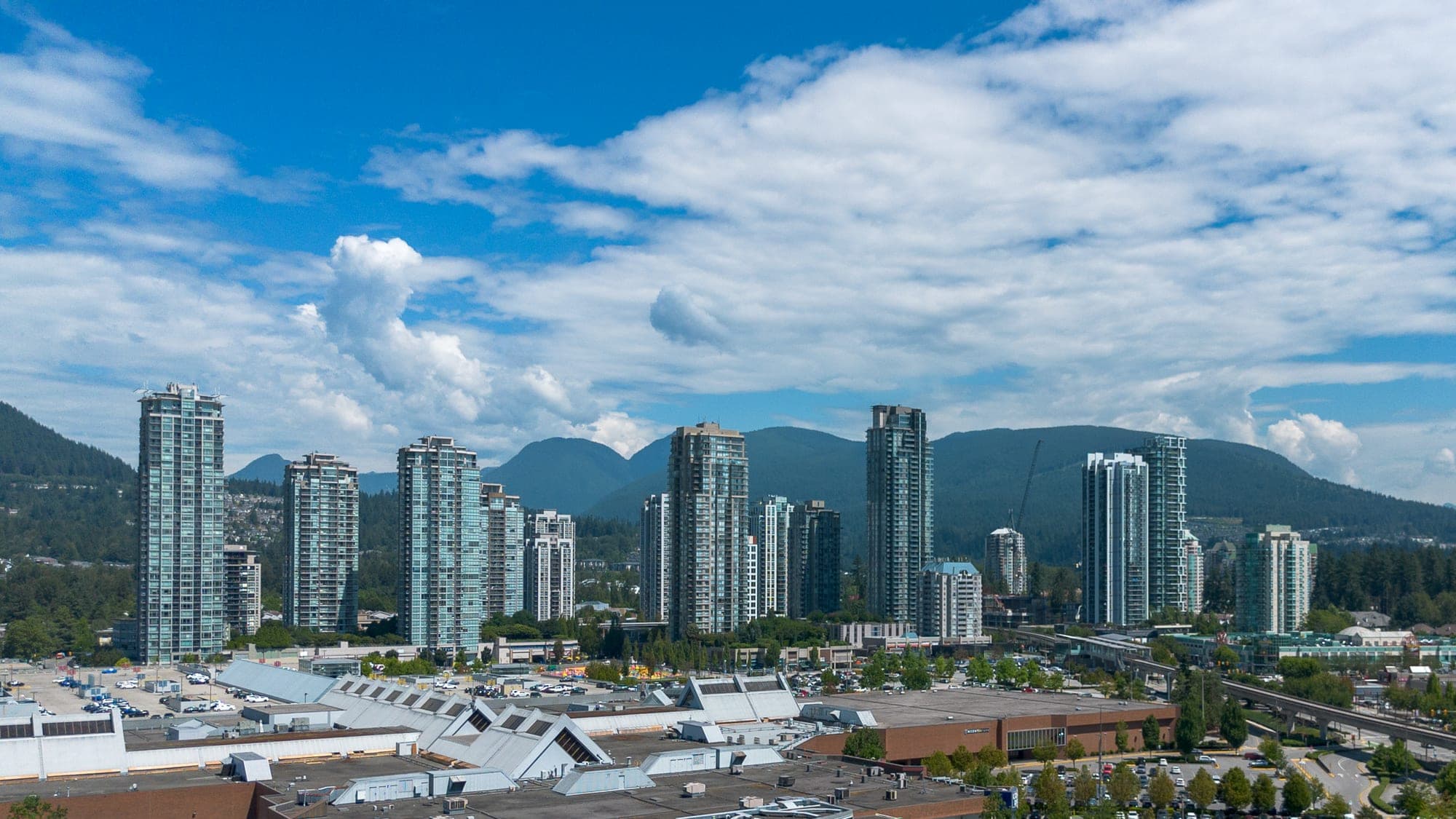
Coquitlam Town Centre skyline with new residential high-rise towers around the Lafarge Lake–Douglas SkyTrain station and Coquitlam's Coast Mountains in the background.
Greater Vancouver · City Guide

Coquitlam

The family side of the SkyTrain — Tri-Cities hub, strongest Korean community in Metro Vancouver, and the mountains right out your back door.

Population
148,625
Land area
122.3 km²
1,215 / km²
Median age
42.2
Foreign-born
45.9%
Top languages spoken
KoreanMandarinPersianTagalog (Filipino)CantoneseSpanish

Living in Coquitlam

A city half rainforest, half skyline.

Coquitlam is the quietest of the four largest Metro Vancouver cities and arguably the best value for newcomer families. The population of 148,000 is dwarfed by Vancouver or Surrey, but the city covers a generous 122 square kilometres running from the Fraser River at its south edge up the slopes of Burke Mountain in the north — which means Coquitlam has more green space, more mountain views, and more large-lot houses than anywhere similar on the SkyTrain network. The 2016 arrival of the Evergreen Extension (the last stretch of the Millennium Line) was transformative: Coquitlam went from a car-dependent suburb to a transit-accessible one overnight, with four SkyTrain stations now serving the city.

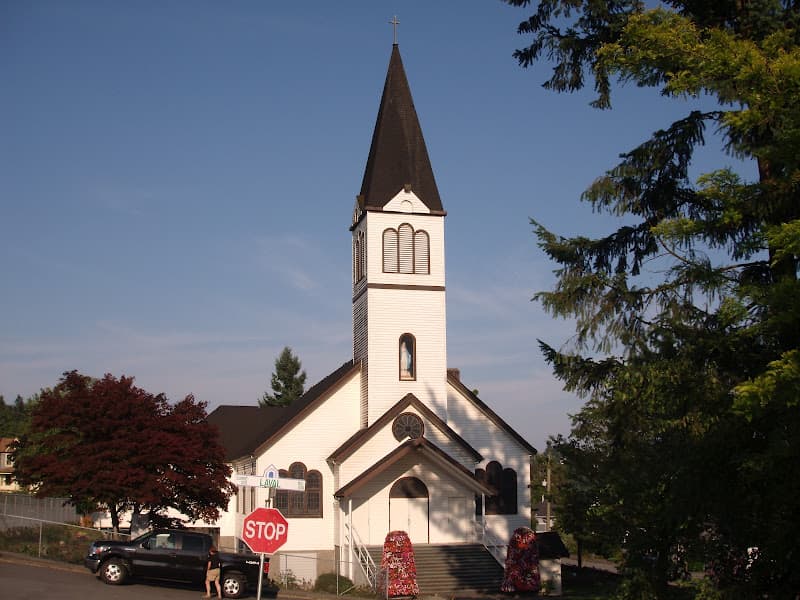
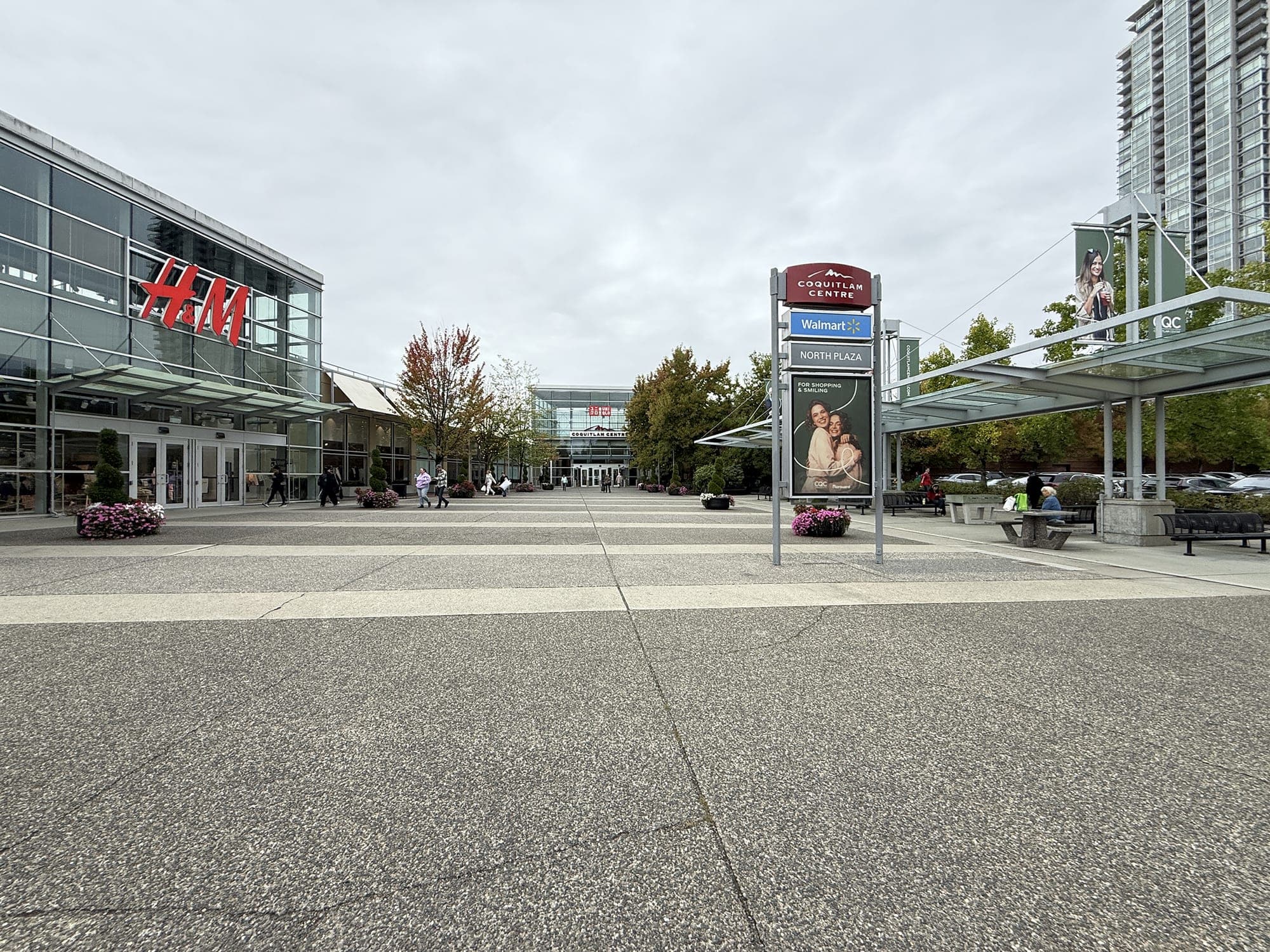
Demographically, Coquitlam is the Korean capital of Metro Vancouver. About one in seven residents speaks Korean as a mother tongue — by far the highest concentration in the region — and the Korean food and retail scene along North Road and around Coquitlam Centre mall is deep and authentic. The city also has significant Chinese, Persian, and Filipino communities. About 46% of residents were born outside Canada, roughly on par with Surrey but slightly lower than Burnaby.

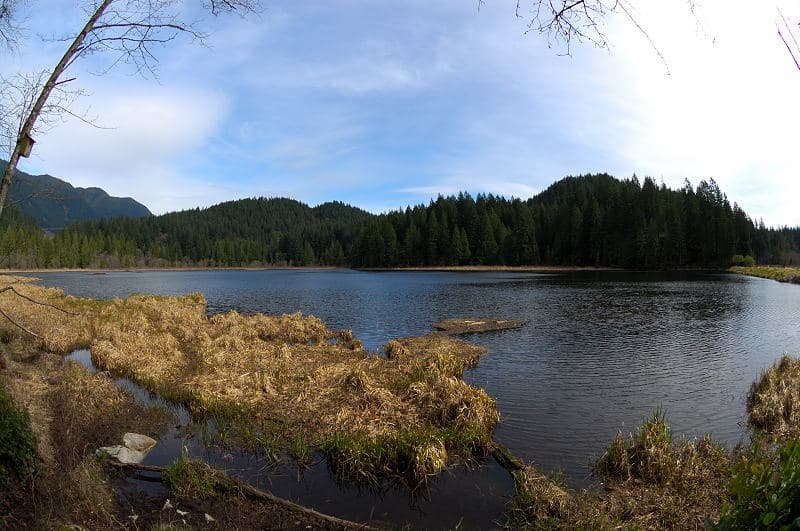
The other thing Coquitlam gets right is proximity to nature. Burke Mountain at the north end of the city has hundreds of kilometres of hiking and mountain biking trails; Mundy Park in central Coquitlam has 178 hectares of Douglas fir forest and two lakes; Minnekhada Regional Park in the northeast is genuinely wild. For a family that wants a house with a yard, decent schools, transit to downtown Vancouver in under 45 minutes, and a trailhead ten minutes from the front door, Coquitlam is often the best answer.
Rankings

Which Coquitlam neighbourhood is right for you?

Same neighbourhoods, three different questions. Pick the ranking that matches what matters to you — and we'll tell you which Coquitlam neighbourhood comes out on top, and why.

Discover

Places in Coquitlam that sell the city to visitors — and keep residents here.

Swipe or use the arrows →

Services in Coquitlam

What things really cost here.

Local price ranges for the most-searched home services. Community submissions + researched quotes, updated regularly.

Getting around

Transit in Coquitlam

Coquitlam is served by the Millennium Line's Evergreen Extension, which opened in December 2016 and connects the Tri-Cities (Port Moody and Coquitlam) to the rest of the SkyTrain network. Four stations serve Coquitlam proper: Burquitlam (at the Burnaby border), Coquitlam Central (at the mall), Lincoln, and Lafarge Lake–Douglas (the eastern terminus). Commute time from Coquitlam City Centre to downtown Vancouver is about 45 minutes with a transfer at Commercial–Broadway. Beyond SkyTrain, Coquitlam is served by frequent bus routes along Lougheed Highway, Barnet Highway, and North Road. The 159 and 160 buses connect the southern parts of the city not served by SkyTrain.

SkyTrain lines
Millennium Line (Evergreen Extension)
Major stations

Burquitlam · Moody Centre · Coquitlam Central · Lincoln · Lafarge Lake–Douglas

Schools & health

For families

Coquitlam School District (SD 43) serves all three of the Tri-Cities — Coquitlam, Port Coquitlam, and Port Moody — making it the fifth-largest school district in British Columbia. Academic performance is consistently above the provincial average. Pinetree Secondary and Dr. Charles Best Secondary are two of the best-regarded public high schools. SD 43 has a particularly strong French Immersion program (reflecting the Maillardville connection) and a strong international education program. Coquitlam is also home to Douglas College — one of BC's largest community colleges — which has its main campus in Coquitlam City Centre right next to Lafarge Lake. Primary healthcare is delivered through Fraser Health, with Eagle Ridge Hospital in Port Moody as the main acute care facility for the Tri-Cities.

Public school district
Coquitlam School District (SD 43) — Coquitlam, Port Coquitlam, Port Moody
Health authority
Fraser Health

Weather & seasons

Best time to visit Coquitlam.

Coquitlam's climate is similar to Vancouver's but with noticeably more rainfall — the city sits closer to the North Shore mountains and gets caught in the same precipitation band that drenches the North Shore. Winters are mild but wetter than Vancouver proper, and summers are warm and dry. The upper elevations on Burke Mountain get significant snow in winter, unlike the lower-elevation parts of the city.

Annual rainfall
1833 mm
Jan avg high
6°C
July avg high
23°C

When to come

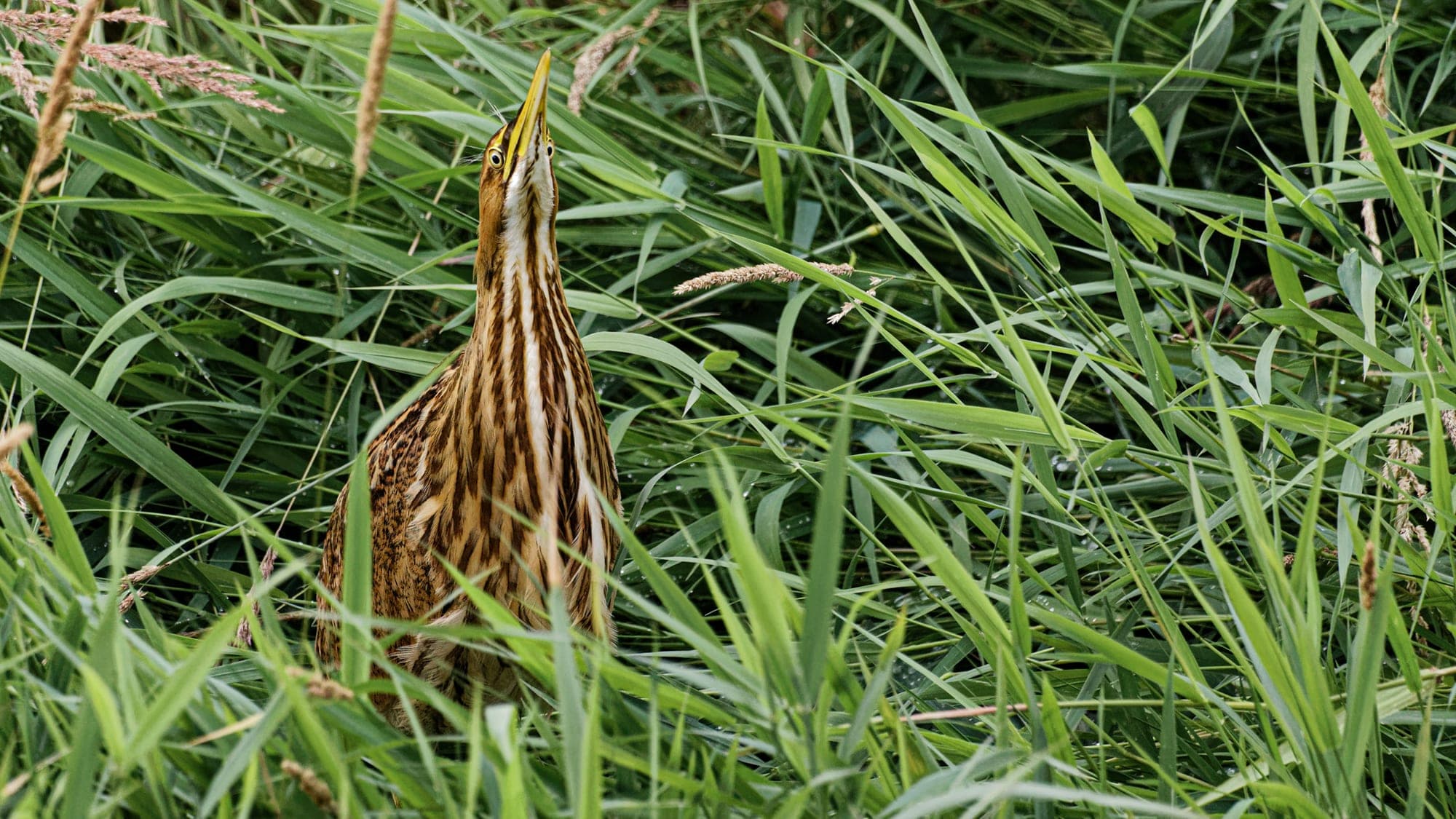
July through September for the outdoor parks and lakes; late November through January for the Lights at Lafarge winter display. March is the Festival du Bois in Maillardville. Spring brings the best bird-watching at Colony Farm.

Getting here

From YVR airport, take the Canada Line to Waterfront, transfer to the Expo Line to Commercial–Broadway, then the Millennium Line Evergreen Extension to Coquitlam. The full trip takes about 75 minutes. A taxi or ride-share runs around $65–85.

About 70 minutes north of the Peace Arch crossing via Highway 99 and Highway 1. Amtrak Cascades from Seattle stops at Pacific Central Station in Vancouver — from there, the Expo and Millennium lines reach Coquitlam in about 50 minutes.

Common questions

What newcomers ask about Coquitlam.

Is Coquitlam a good place for Korean-speaking newcomers?

Coquitlam has the largest Korean-Canadian community in Metro Vancouver by a significant margin. About 1 in 7 residents speaks Korean as a mother tongue — the highest ratio in the region. The North Road corridor between Burquitlam and Coquitlam Centre is the de-facto Koreatown of Metro Vancouver, with Korean supermarkets, restaurants, karaoke, and services concentrated along a few blocks. For newcomers from Korea specifically, Coquitlam is often the easiest landing point in Canada for daily life, food, and community.

How long is the commute from Coquitlam to downtown Vancouver?

From Coquitlam City Centre (Lafarge Lake–Douglas station) to Waterfront in downtown Vancouver is about 45 minutes on the SkyTrain with a transfer at Commercial–Broadway. From Burquitlam it's about 30 minutes. Driving during rush hour via Highway 1 is typically 45–60 minutes. Most commuters take the SkyTrain.

Is Coquitlam cheaper than Burnaby?

Yes — noticeably. CMHC's 2023 data puts a Coquitlam two-bedroom purpose-built rental at $1,938 vs Burnaby's $2,062. On the secondary market the gap is typically $200–400 per month in favour of Coquitlam for equivalent units. Detached houses in Coquitlam are also significantly cheaper than in Burnaby, which is one of the main reasons families relocate here.

What's the Lights at Lafarge?

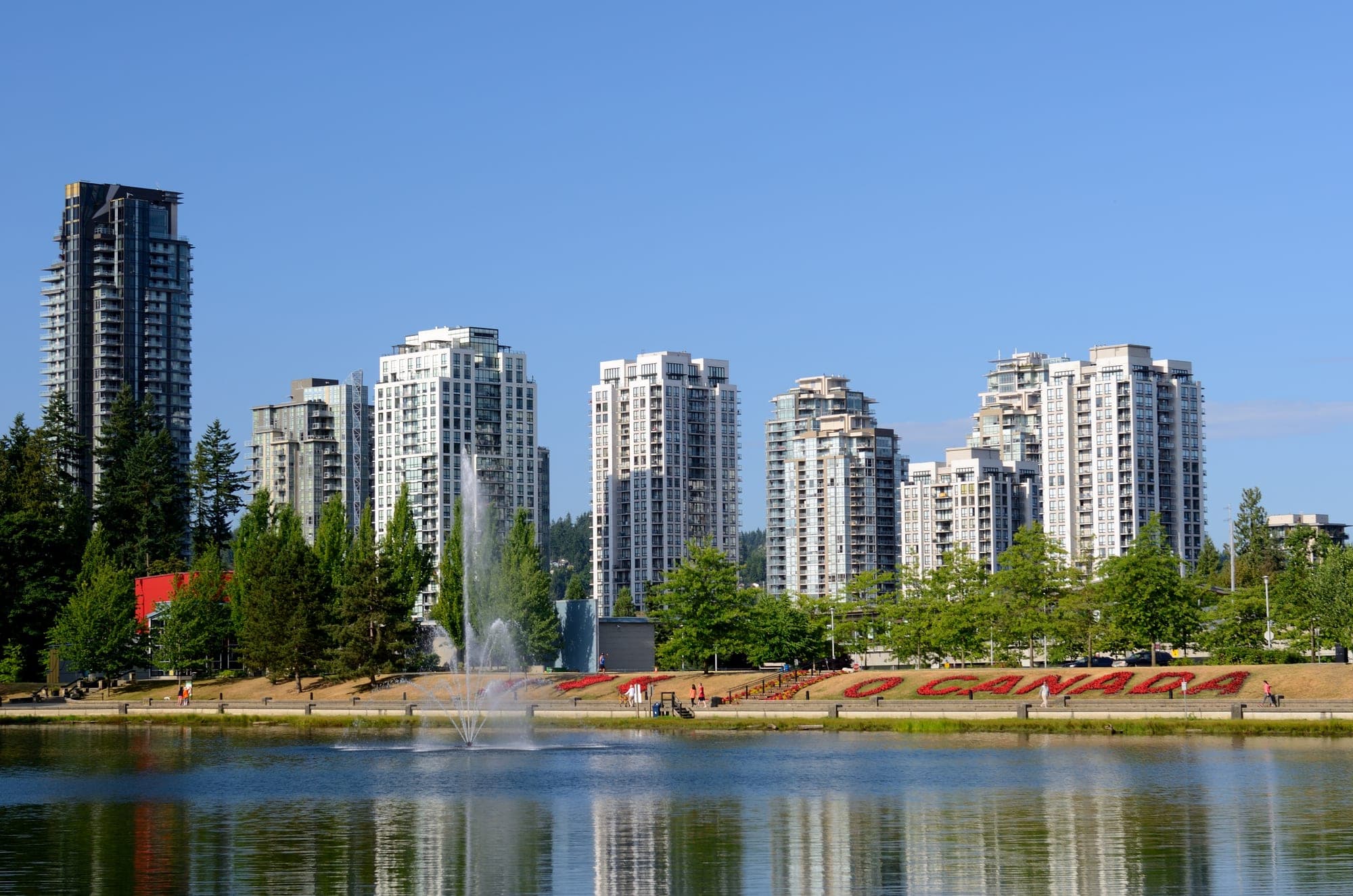
An annual free Christmas light display at Lafarge Lake Park in Coquitlam City Centre, running from late November through January. More than 100,000 LED lights are wrapped around trees, bridges, and sculptures on the 1.2-km lake loop. Entry is free, the loop is walkable in 45 minutes, and the SkyTrain station is right at the park entrance. One of the best Metro Vancouver winter traditions.

Is there a Chinese community in Coquitlam?

Yes — Coquitlam has a substantial Chinese-Canadian community, though smaller than Richmond's. Mandarin is the #2 non-official mother tongue in the city after Korean. T&T Supermarket inside Coquitlam Centre is one of the best-stocked Asian grocery stores in the Tri-Cities, and there are good Chinese restaurants throughout the city. For newcomers seeking the densest Chinese-speaking community, though, Richmond is still the main choice.

What's the difference between Coquitlam and Port Coquitlam?

Coquitlam (population 148,000) and Port Coquitlam (population 61,000) are separate municipalities that border each other. Port Coquitlam is smaller, more affordable, more car-dependent (no SkyTrain station), and has a more small-town character. Coquitlam has the SkyTrain, the Coquitlam Centre mall, and Douglas College. Both share the Coquitlam School District (SD 43) and Fraser Health services. Most newcomers choose Coquitlam proper for the transit access.

Is Burke Mountain worth moving to?

Burke Mountain is the newest master-planned subdivision in Coquitlam, on the slopes of the north end of the city. Detached houses and townhouses there are noticeably cheaper than equivalent Westside Vancouver housing, the schools are new and well-regarded, and you have immediate trailhead access to hundreds of kilometres of mountain biking and hiking. The trade-off is a long commute to the SkyTrain (the 159 bus runs but isn't frequent) and near-total car dependence.

Is Coquitlam safe?

Yes — Coquitlam has one of the lowest crime rates of any major Metro Vancouver city. Violent crime is uncommon, property crime is below the regional average, and the suburban layout means most residents feel very safe. The main concerns, as elsewhere, are auto theft and bike theft near SkyTrain stations.

Do I need a car in Coquitlam?

If you live within a 10-minute walk of one of the four SkyTrain stations (Burquitlam, Coquitlam Central, Lincoln, Lafarge Lake–Douglas), you can realistically live without one. Outside that corridor — Burke Mountain, Westwood Plateau, parts of Central Coquitlam — a car is strongly recommended. Coquitlam is generally more car-dependent than Burnaby or Vancouver.

What's the rainfall like compared to Vancouver?

Noticeably wetter. Coquitlam sits close to the Coast Mountains and gets caught in the same precipitation band that drenches the North Shore — about 1,833 mm of annual rain compared to Vancouver's 1,189 mm. That's about 50% more rain. If the rain was already your concern about Vancouver, Coquitlam won't help.

Keep exploring

Cities near Coquitlam.

Greater Vancouver is a collection of very different cities, each with its own rhythm, rents, and food scene. If you're comparing or planning a move, these are the obvious ones to look at next.