
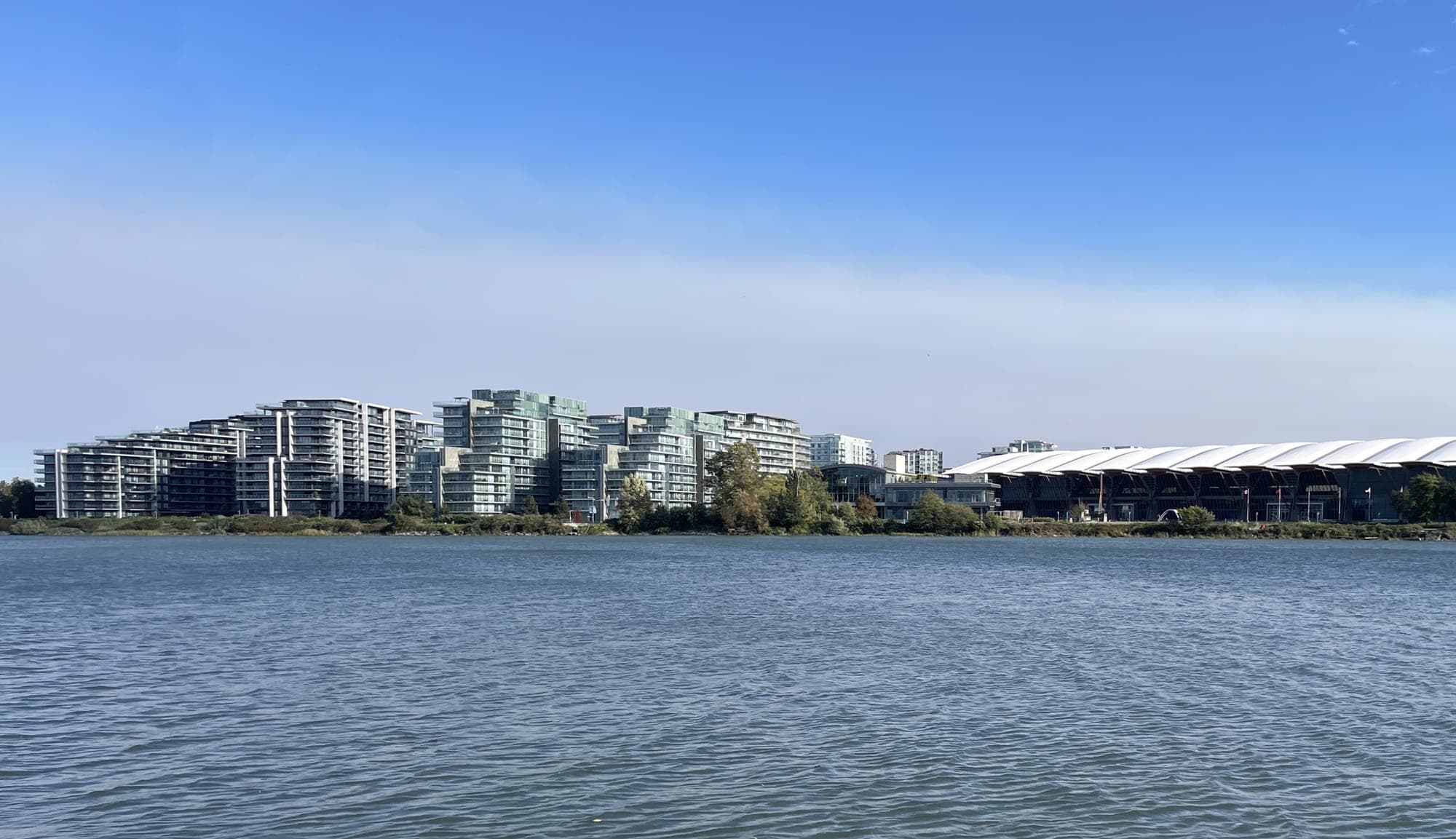
Vancouver vs Richmond
Quick answer
In CMHC's October 2025 purpose-built rental survey, the Richmond-zone two-bedroom average was $2,046 and the weighted City of Vancouver figure used here was $2,644. That $598 difference is useful context, but it is not a quote for a vacant home. Compare actual listings and door-to-door trips from two specific addresses before choosing.
Rent figures: CMHC Rental Market Survey, October 2025 · demographics: Statistics Canada Census 2021 · reviewed 2026-09-14.
Start with housing samples that mean the same thing. The figures in the table come from CMHC's October 2025 Rental Market Survey of purpose-built rental buildings; they include occupied units and do not represent today's asking rent for a particular listing. Richmond's one- and two-bedroom survey averages are lower in this dataset, while the size, age, location and availability of the homes you can actually rent may differ. Save comparable listings on the same day and include parking, utilities and deposits separately.
Then test transportation from the exact addresses. The Canada Line connects Richmond–Brighouse and YVR with downtown Vancouver, while trips outside the rail corridor can require a bus connection. Richmond is in fare Zone 2 and Vancouver is in Zone 1, so a regular weekday SkyTrain commute across the boundary affects the fare; buses are charged as one zone. Use TransLink's trip planner for the departure and return hours you will actually travel.
Finally, compare daily needs rather than city stereotypes. Richmond's official profile identifies YVR, major employment sectors, parks and extensive trail and cycling networks. Vancouver offers a larger set of dense neighbourhoods, but walkability and travel time vary sharply by address. Check the offered home's flood information, school catchment when relevant, grocery route and late-evening return trip. Community language and cuisine can matter personally, but nationality or language does not determine which municipality fits a household.
Address-level comparison
Compare two real homes in five checks
- 1Save two currently available homes with the same bedroom count and record rent, parking, utilities, deposits and lease terms.
- 2Plan the morning and return trip from each exact address on the weekday and weekend hours you expect to travel.
- 3Confirm the required transit fare, last practical connection and whether a missed bus materially changes the trip.
- 4Check school catchment, child care, groceries, health care and accessibility only where they matter to your household.
- 5Review municipal flood information and the building's insurance, parking and emergency procedures before committing.
Side-by-side data
Every row is cited. Scroll horizontally on mobile.
| Metric | Vancouver | Richmond |
|---|---|---|
Population Stats Canada 2021 Census | 662,248 | 209,937 |
Land area | 115.18 km² | 128.96 km² |
Median age | 40 | 43.4 |
Foreign-born | 41.8% | 60% |
Top non-English language | Cantonese | Cantonese |
Median household income Stats Canada 2020 income year | $80,500 | $78,500 |
1BR rent (CMHC avg) CMHC purpose-built rental | $1,862 | $1,676 |
2BR rent (CMHC avg) | $2,644 | $2,046 |
Transit pass (monthly) | $117 | $157 |
Annual rainfall | 1189 mm | 1108 mm |
Walk Score | 80 | 63 |
SkyTrain lines | Expo Line · Millennium Line · Canada Line | Canada Line |
Safety (CSI, 2024) Statistics Canada Crime Severity Index · lower is safer | 83.5 ▴ +8.5 vs national | 83.5 ▴ +8.5 vs national |
Who each city is for
Pick Vancouver if…
Choose the Vancouver address when it shortens your recurring trips enough to justify the housing difference, the nearby services work without an extra connection, and the home itself meets your budget and space requirements. Test the precise neighbourhood; a city-wide label does not establish walkability.
Read the full Vancouver guide →Pick Richmond if…
Choose the Richmond address when its actual rent and space work better, Canada Line or bus access fits your routine, or proximity to YVR and Richmond destinations saves meaningful time. Confirm the school catchment, flood information and last connection for that address instead of relying on a city-wide assumption.
Read the full Richmond guide →Decision
Which one should you pick?
There is no city-wide winner. Put one real Vancouver listing and one real Richmond listing into the same monthly budget, then compare the morning and return trips to work, school and care. Richmond's lower October 2025 purpose-built survey averages may leave more room in the budget; a Vancouver address may return that value through shorter recurring trips. Choose from the two address-level results.
Vancouver vs Richmond — what people usually ask
Is Richmond cheaper than Vancouver?
Richmond's October 2025 CMHC purpose-built survey averages were lower: $2,046 for two bedrooms versus the $2,644 weighted City of Vancouver figure used here. These averages include occupied units and are not current asking-rent quotes. Compare equivalent available listings before treating the difference as savings.
How should I compare the commute?
Use two exact addresses and plan both directions at the hours you will travel. Include the walk, bus connection, Canada Line or other SkyTrain segment, transfer buffer and last practical return. City-centre-to-city-centre times hide the part of the trip that often decides the choice.
What location risks should I check in Richmond?
Review the City of Richmond's flood-protection information for the address and ask the landlord, strata or insurer about the building's procedures. For personal safety, inspect the building and route at the times you will use them and consult correctly scoped local police information; regional statistics cannot score one address.
How long is the commute to YVR from each?
Richmond is closer — the airport is physically in Richmond on Sea Island. Central Richmond to YVR is about 15 minutes on the Canada Line or 10 minutes by car. From downtown Vancouver, the Canada Line takes about 26 minutes to YVR.
Dig deeper