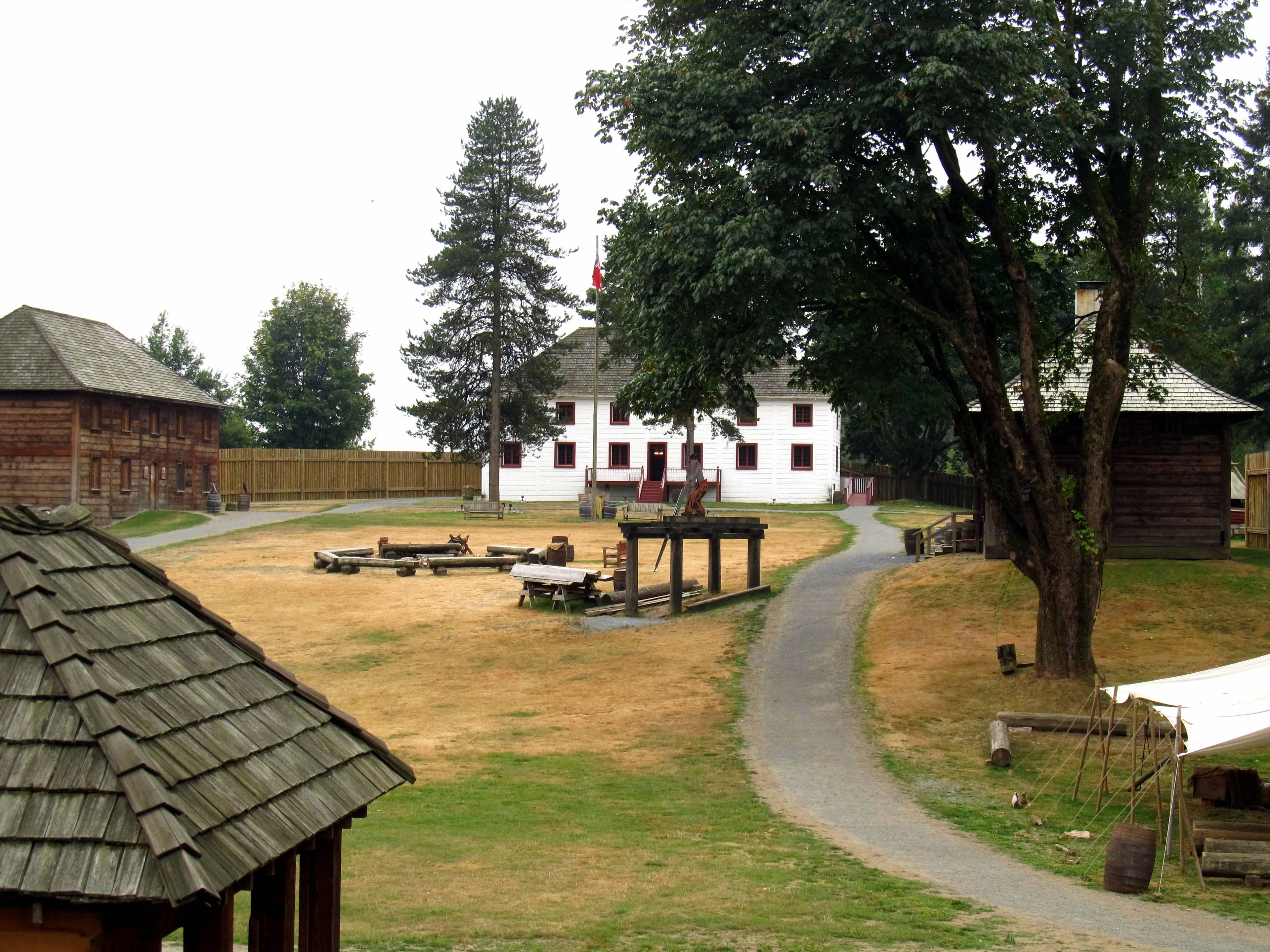
Fort Langley National Historic Site
The birthplace of British Columbia — the original 1827 Hudson's Bay Company trading post where Governor James Douglas was sworn in on November 19, 1858.
Metro Vancouver's fastest-growing city — Fort Langley's historic heart, Willoughby's new towers, and a SkyTrain extension on the way.
Living in Langley
Langley isn't one city — it's two. The Township of Langley is a 307 square kilometre District Municipality that runs from the Fraser River in the north to the US border in the south, and the City of Langley is a smaller 10 square kilometre urban centre of about 29,000 people tucked inside the Township's southern edge. The two share a school district, an RCMP detachment, a shopping catchment (Willowbrook mall), and, for almost every newcomer Googling "moving to Langley", a single identity. Combined population is just under 162,000 — making the Langleys together the fourth-largest Metro Vancouver municipality after Vancouver, Surrey, and Burnaby, and the fastest-growing of any major city in the region.
The fast-growth story is real. The Township's population jumped 13.1% between 2016 and 2021 — nearly double the provincial rate and more than double the national rate. Most of that growth has concentrated in Willoughby, a formerly agricultural area along Highway 1 that has been rezoned for new residential and is now packed with townhouses, mid-rise apartments, and the occasional high-rise. Willoughby's South Asian and Korean communities are the largest of any Langley neighbourhood, with Punjabi and Korean both in the top five mother tongues. Walnut Grove (the slightly older, slightly more established family suburb further north) has a similar profile. Aldergrove, the eastern edge of the Township, is where you go if you want actual rural land — horse farms, blueberry fields, and houses on multi-acre lots.
The other Langley story is the Surrey–Langley SkyTrain extension. Construction is underway along the Fraser Highway corridor, extending the Expo Line from King George station in Surrey through eight new stations to the edge of the City of Langley, with a planned opening in 2028–2029. When it opens, it will fundamentally change the city's commute profile — right now, Langley is a car-dependent suburb with 401 and C62 express buses to Surrey SkyTrain doing the heavy lifting. For newcomers who want a house with a yard, a fast-growing South Asian or Korean community, and rent substantially below Surrey or Burnaby, Langley is increasingly the answer — especially if you can see past the current car-dependence to the SkyTrain that's coming.
Where to live
Langley's fastest-growing neighbourhood — new townhouses and mid-rises along 200th Street, a big Korean and South Asian community, and the new SkyTrain terminus.
The historic heart of BC — the original 1827 trading post, a preserved colonial-era village, antique shops, and riverfront heritage on the Fraser.
The established family suburb on the north side of Langley — 1980s–2000s houses, strong schools, and the gateway to the 1 Highway and the Golden Ears Bridge.
The small urban centre — Willowbrook mall to the north, older apartment stock along Fraser Highway, and the future SkyTrain station in 2028.
Discover
Swipe or use the arrows →
Services in Langley
Local price ranges for the most-searched home services. Community submissions + researched quotes, updated regularly.
Food in Langley
Getting around
Langley is currently Metro Vancouver's largest municipality without a SkyTrain station. The Surrey–Langley SkyTrain extension, under construction since 2024, will extend the Expo Line from King George station in Surrey through eight new stations to 203 Street in Willoughby, with a planned opening in 2028–2029. Until then, Langley's main transit connection to the SkyTrain network is the C62 express bus from Langley Centre to Surrey Central SkyTrain (about 25 minutes) — on a dedicated Fraser Highway bus-rapid-transit corridor. Local TransLink service covers Willoughby, Walnut Grove, Fort Langley, and Aldergrove with lower frequency. Langley is entirely in fare Zone 3 — the highest zone — which means a Langley-to-downtown commute today is both slow (1h 15m typical) and expensive ($189/month pass). Both will improve significantly with SkyTrain.
Langley Centre bus loop (current)
Schools & health
Langley School District (SD 35) serves both the Township and the City of Langley as a single combined district — one of the largest school districts in British Columbia. Academic performance is generally around the provincial average, with Walnut Grove Secondary and R.E. Mountain Secondary (in Willoughby) among the top-ranked public high schools. SD 35 has a fast-growing French Immersion program and a substantial international education program attracting students from Korea, Japan, and Latin America. Langley is also home to Trinity Western University (a private Christian university) and Kwantlen Polytechnic University's Langley campus. Primary healthcare is through Fraser Health, with Langley Memorial Hospital serving as the main acute care facility for the area. Major trauma cases are typically transferred to Royal Columbian in New Westminster.
Safety in Langley
Langley's safety profile is sharply divided between the Township and the City of Langley. Township of Langley has a below-average Crime Severity Index (roughly 95, close to the BC average of 93) and is genuinely quiet outside of the Willoughby commercial corridor. City of Langley, though — the smaller urban-core municipality — has historically had one of the highest CSI figures in Metro Vancouver, driven by concentrated property crime and visible street disorder around the Fraser Highway / Logan Avenue / 203rd Street area. 2024 saw Langley City's CSI fall to its lowest level in more than 25 years (a multi-year decline the RCMP attributes to targeted enforcement and new social housing), but it remains higher than most of Metro Vancouver. For newcomers, the practical takeaway is to distinguish Township neighbourhoods (Willoughby, Walnut Grove, Fort Langley) — quiet and safe — from the immediate Fraser Highway corridor in the City of Langley, where property crime risk is higher.
Langley CMA
125.0
Crime Severity Index — 2024
Canada (all CMAs)
78.0
Crime Severity Index — 2024
How to read this
Langley is 47.0 points above the Canadian average. CSI weights crimes by sentencing severity, not just count.
Canada national average: 77.9
Quietest by every common-sense measure
Areas the news cycle asks about
The Fraser Highway / Logan Avenue / 203rd Street corridor in the City of Langley has concentrated visible street disorder and above-average property crime — particularly theft from vehicles around Willowbrook and the bus loop.
Targeting newcomers
These follow a small number of repeating playbooks aimed at people who are new to the city, the country, or the rental market. None of them are unique to Langley, but the local versions are worth recognising in advance.
Especially common for new Willoughby towers advertised below market. Real Langley landlords show units in person; never send money before viewing and signing a BC tenancy agreement.
Unsolicited offers on 'pre-SkyTrain' condo investments in Willoughby or along Fraser Highway. Verify any pre-sale through the developer's licensed marketing office; never wire deposit money based on a cold call.
Robocalls in English, Punjabi, Korean, Mandarin, and Tagalog claiming you owe tax or your immigration status has been revoked. CRA and IRCC do not call to threaten arrest. Hang up.
Persistent issue — theft from vehicles around the mall is above Metro Vancouver averages. Don't leave shopping bags, laptops, chargers, or electronics visible in your car.
Common in Walnut Grove and Willoughby houses — driveway sealing, roof inspection, gutter cleaning, 'free HVAC assessment'. Legitimate contractors carry Township or City of Langley business licences. Ask to see the licence; verify with the municipality.
What to actually do
Safety is about probabilities, not guarantees, and reasonable newcomer caution applies anywhere. If something feels off, trust that instinct. For non-emergency police reports in Langley, use the local non-emergency police line; for emergencies always call 911.
Weather & seasons
Langley's climate is drier and warmer than most of Metro Vancouver. Sitting 40+ kilometres east of the Coast Mountains' precipitation shadow, Langley gets about 1,450 mm of annual rainfall — less than the North Shore or Coquitlam and closer to Vancouver proper. Summers are warmer than the coastal cities (July highs regularly reach 26°C versus Vancouver's 23°C) and winters are slightly cooler with more snow days. Agriculture is why Langley is what it is — the Fraser Valley soil and dry-sunny summer pattern support the Township's blueberry farms, vineyards, and horse pastures.
July and August for Fort Langley village and the outdoor parks — the warmest and driest period. September for the Langley Fine Arts fall festival and local blueberry harvest. April–June for Campbell Valley wildflowers.
From YVR airport, take the Canada Line to Bridgeport, then the 620 bus to Langley Centre — about 75 minutes total. By car, the trip is 45–55 minutes via Highway 99 and Highway 1. Taxi or ride-share runs $80–110. SkyTrain will dramatically shorten the transit time once the Surrey–Langley extension opens.
The Aldergrove border crossing is in the southeast corner of Langley Township (open 8 AM–midnight) — about 25 minutes from downtown Langley. The larger Peace Arch crossing is 30 minutes west via Highway 1. Amtrak Cascades from Seattle doesn't stop in Langley.
Common questions
Yes — they are two separate municipalities. Township of Langley is a large District Municipality (307 km², population 132,603) that surrounds the smaller City of Langley (10 km², population approximately 29,000) on three sides. They share a school district (SD 35), an RCMP detachment, and a combined newcomer identity, but have separate mayors, councils, bylaws, and tax rates. In most day-to-day newcomer conversations, 'Langley' means both together.
The Surrey–Langley SkyTrain extension is under construction and scheduled to open in 2028–2029. It will extend the Expo Line from King George station in Surrey through eight new stations along the Fraser Highway corridor, ending at 203 Street in Willoughby. The project will fundamentally change Langley's commute and real-estate profile — currently Langley is the largest Metro Vancouver municipality without SkyTrain.
Yes — Langley has one of the largest South Asian communities in Metro Vancouver outside Surrey, and one of the largest Korean communities outside Coquitlam. Both are concentrated in Willoughby and along the 200th Street / Fraser Highway corridor. H-Mart Korean grocery is at Willowbrook mall; Punjabi and Pakistani grocers, restaurants, and a major Gurdwara are all on the 200th Street strip. Walnut Grove and Willoughby schools have significant Punjabi- and Korean-speaking populations.
It depends on whether you mean Township or City. Township of Langley (Willoughby, Walnut Grove, Fort Langley) has a roughly average Crime Severity Index (~95) and is genuinely quiet. City of Langley — the smaller urban-core municipality — has historically had a high CSI driven by concentrated property crime along the Fraser Highway corridor. That said, 2024 was the City's lowest CSI in more than 25 years. For most newcomers buying or renting in the Township, Langley is safe; stay alert about theft from vehicles if you're downtown.
Currently, about 1 hour 15 minutes on the C62 express bus + SkyTrain combo (Langley Centre → Surrey Central → Waterfront). Driving in rush hour is typically 1h 15m–1h 30m via Highway 1. Both are slower than every other Metro Vancouver city we cover. The Surrey–Langley SkyTrain extension (opening 2028–2029) will reduce the transit commute to about 55 minutes.
Fort Langley is genuinely one of the most scenic residential neighbourhoods in Metro Vancouver — a preserved 1880s village centre, the National Historic Site, riverfront walks, and strict heritage protection. The trade-off is cost (heritage houses run 30–40% above equivalent Walnut Grove or Willoughby) and car-dependence (no SkyTrain, infrequent bus service). For families specifically drawn to heritage character and willing to commute by car, Fort Langley is excellent.
Yes, strongly recommended — especially until SkyTrain opens in 2028–2029. Downtown Langley City and Fort Langley village are the most walkable pockets (Walk Score 70s), but Willoughby, Walnut Grove, and especially Aldergrove are car-dependent. The Walk Score for Langley as a whole is about 45 — below Coquitlam (51), and far below New Westminster (77) or Vancouver (78). Most Langley households run two cars.
Langley Memorial is a mid-sized community hospital with an emergency department, maternity, most routine surgery, and imaging — but for trauma, cardiac, or neurosurgical cases patients are typically transferred to Royal Columbian Hospital in New Westminster. For primary care and most day-to-day emergencies, Langley Memorial is fully capable. It's in the western part of the City of Langley near Willowbrook.
Willoughby is the newest and fastest-growing neighbourhood in Langley — formerly agricultural land rezoned for residential in the late 2000s, now packed with townhouses, mid-rises, and increasingly high-rise towers along the 200th Street corridor. It has the largest Korean and South Asian communities in Langley, the future SkyTrain terminus, and rents among the highest in the city (reflecting new-build construction). For newcomers wanting new construction and an established cultural community, Willoughby is the strongest single answer.
On rent, yes — slightly. CMHC's 2023 data puts Langley's average rent at $1,801 vs Surrey's $1,845. For equivalent new construction in Willoughby vs Surrey's Clayton, Langley typically lists $100–200/month lower. On detached houses, Langley is noticeably cheaper, especially in Aldergrove and Walnut Grove. The big caveat is transit — Surrey has SkyTrain; Langley won't until 2028–2029.
Plan further
If you're planning a visit, there are hour-by-hour itineraries with cited costs. If you're planning a move, the cost-of-living breakdown and the newcomer essentials guides are the next stops.
Monthly budget
Line-by-line monthly budget with cited rent, groceries, transit, and hydro numbers.
Day trips
Honest day-trip plans with BC Ferries and Sea-to-Sky Highway directions.
Newcomer guides
Step-by-step essentials for the first month in BC — cited and dated.
Keep exploring
Greater Vancouver is a collection of very different cities, each with its own rhythm, rents, and food scene. If you're comparing or planning a move, these are the obvious ones to look at next.
Fast-growing, family-friendly, with the strongest South Asian community.
Downtown cores, historic neighbourhoods, and the densest food scene in BC.
Mountain views, new Korean restaurants, and space to breathe.